
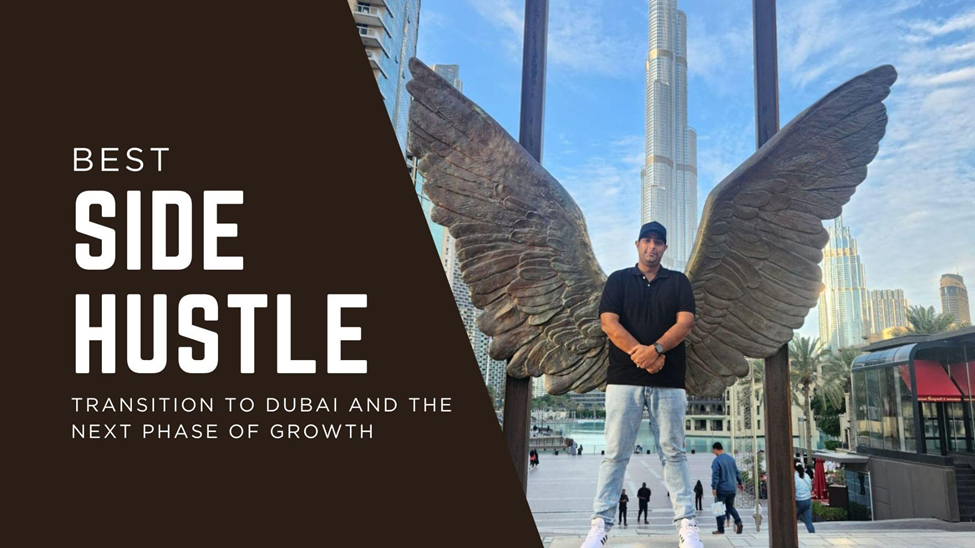
For many professionals, relocating to Dubai represents an opportunity. For Amarjeet Kumar, it represented something deeper, a test of preparation built over years of disciplined growth.
By the time he made the move, his career had already been shaped by operational experience, system-driven thinking, and a consistent focus on performance. Yet stepping into Dubai’s global professional environment introduced a new level of complexity. The transition was not simply about changing geography; it was about adapting to a faster, more diverse, and highly competitive ecosystem.
The early days in Dubai demanded observation rather than assertion. The workplace operated at a different pace. Teams were multicultural, expectations were immediate, and communication required precision. Professional credibility could not rely on past achievements; it had to be established again through execution.
For Amarjeet, this phase marked a shift in mindset. In India, familiarity with systems and culture allowed leadership to grow organically. In Dubai, leadership required structured clarity. Collaboration meant understanding diverse work styles, cultural perspectives, and decision-making approaches. Listening became as important as leading. Adapting to this environment required recalibrating existing frameworks. Systems and engagement strategies that had worked successfully in previous roles were reassessed and refined to fit a global context. Processes became more data-driven, documentation more structured, and communication more intentional. The emphasis moved from local effectiveness to scalability.
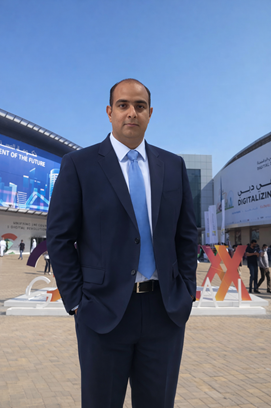
Professionally, the move accelerated maturity. Decision-making carried broader implications. Stakeholder expectations were higher. Accountability was immediate. Working in an international setting strengthened Amarjeet’s ability to align strategy with execution while maintaining operational discipline.
Beyond the professional shift, the personal transition was equally significant. Relocating to a new country meant building a routine from the ground up, adjusting to a new culture, environment, and lifestyle while maintaining focus on professional responsibilities. The experience demanded independence, resilience, and emotional balance.
Dubai’s competitive environment also reinforced a core belief that had guided his earlier career: consistency outperforms intensity. Rather than pursuing visibility, Amarjeet focused on reliability. Over time, steady execution built trust, and trust opened space for broader influence.
One of the defining outcomes of this period was a deeper understanding of global collaboration. Working with diverse teams expanded his perspective on leadership, showing that influence is built not through authority alone but through clarity, respect, and adaptability.
Looking back, the move to Dubai was not the beginning of success but the expansion of capability. The discipline formed in earlier years, through operational roles, continuous learning, and structured growth, proved transferable in an international environment.
For Amarjeet Kumar, Dubai became a chapter of refinement rather than reinvention. It validated the foundation he had built long before the move and demonstrated that preparation, when consistent, can scale across borders.
The transition ultimately marked a new phase in his journey, one defined by global exposure, strategic thinking, and a broader understanding of leadership in a connected world.





Leave a Reply